
Das Viswanath M.Sc., Ph.D.

About me
Group leader of the Translational Disease Models and Neurodegeneration at the Institute of Molecular and Translational Medicine. We're a dynamic team with a two-fold focus, each facet contributing to the broader goal of unravelling the mysteries of neurodegenerative disorders and translating our findings into tangible therapies.
Please follow the link to my research home page for more information on what we do: https://www.imtm.cz/laboratories/translational-disease-models-and-neurodegeneration
Journals

Books & book chapters
Doctoral mentorship

Annadurai Narendran M.Sc., Ph.D.
Identification and Characterisation of Tau minimal regions as Potential Pharmacological Targets against Tau Spreading in Tauopathies

Kozlov Ihor
Role of axonal transport and pathology in neurodegeneration
Master mentorship

Bechná Eliška
3D spheroids cultures of tumor cell lines for drug discovery studies
Pavlíková Martina
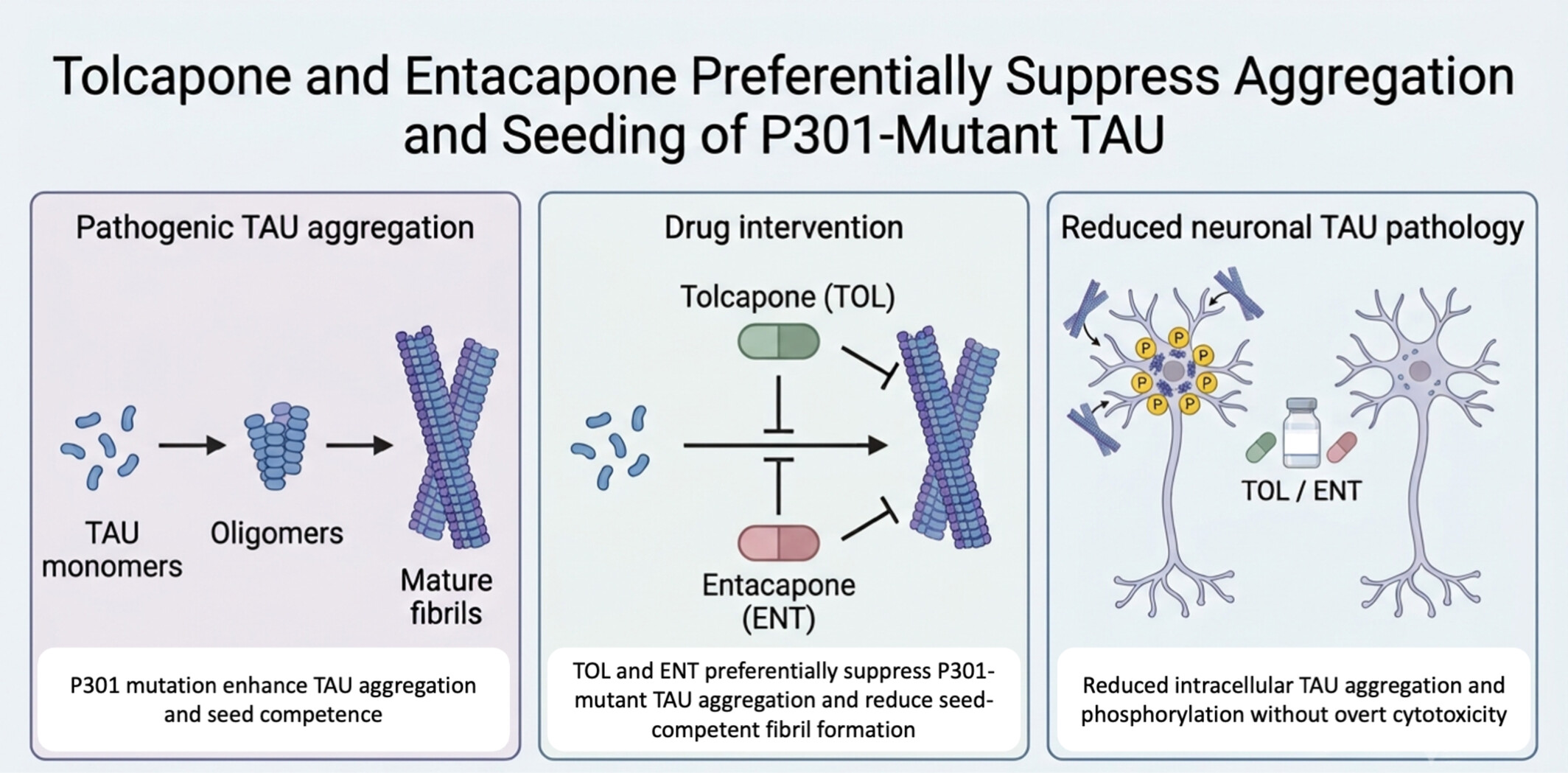
Specific pharmacological modulators of tau aggregation and spreading for Alzheimer's disease preclinical studies.
Skoupilová Patricie
Examination of mutations in tau on the activity of small molecules against prion-like tau formation in tauopathies
Bachelor mentorship
Chudáčková Alica
Biochemical and Cellular Analysis of Amyloid Staining Agents in Models of Tauopathies and Synucleopathies
Vrablíková Barbora
Cytotoxicity of microtubule-stabilizing drug laulimalide in hypoxic human colorectal and cervical cancer cells
Open positions
1 Medical biology
| Project: | The role of tumor hypoxia in the development of acquired resistance to microtubule-targeted drugs |
|---|---|
| Supervisors: | Das Viswanath M.Sc., Ph.D. |
| Available: | 1 |
| Intended for: | Doctoral training |
| Summary: | 1 place in full-time study |
1 Chemical biology and experimental therapeutics
| Project: | A combination of 2D and 3D cell cultures for a smart and effective identification and characterization of anti-hypoxic candidates |
|---|---|
| Supervisors: | Das Viswanath M.Sc., Ph.D. |
| Available: | 1 |
| Intended for: | Doctoral training |
| Summary: | Hypoxia is a prominent feature of different solid tumor types. A central component of hypoxic adaptation is the stabilization of hypoxia-inducible factor-1 (HIF-1), a key transcriptional regulator of hypoxia that orchestrates the transcriptional regulation of genes involved in a plethora of cellular processes. Considering the multiple roles of HIF-1 in cancer, interest in novel small-molecule inhibitors of the HIF-1 pathway has steadily increased over the past 10 years. However, despite extensive research, no specific inhibitor of HIF-1 has been brought to the market, making the field still ripe for further exploration. The goal of the present work is to utilize the potential of a combination of 2D and 3D cellular models for identification and characterization of inhibitors of HIF-1 and/or HIF-1 pathway by screening in 2D cultures, and lightsheet microscopy and mass spectrometry studies in spheroid cultures. |
2 Pathophysiology and new drug targets
| Project: | The role of tumor hypoxia in the acquisition of resistance to microtubule-targeting drugs |
|---|---|
| Supervisors: | Das Viswanath M.Sc., Ph.D. |
| Available: | 1 |
| Intended for: | Doctoral training |
| Summary: | Hypoxia is one of the major factors causing resistance to microtubule-stabilizing drugs (MSDs) and other non-microtubule drugs used in chemotherapy. Hypoxia results in changes in tubulin conformation, expression of tubulin isotypes and metabolic pathways that make cancer cells less susceptible to paclitaxel, a taxane used extensively in the treatment of solid tumors. Recent cellular studies have shown that non-taxane MSDs with a similar mode of microtubule stabilization to paclitaxel is more effective in hypoxic cancer cells than paclitaxel. Due to a different microtubule-binding site, we hypothesize that non-taxane MSDs may have a better cytotoxic effect in cancer cells under hypoxia. The goal of this project is to study the anti-cancer effect of non-taxane MSDs in hypoxic ovarian and cervical cancer cell models. |
| Project: | An extensive structural and biochemical characterization of tau oligomeric species in Alzheimer’s disease and other tauopathies |
|---|---|
| Supervisors: | Das Viswanath M.Sc., Ph.D. |
| Available: | 1 |
| Intended for: | Doctoral training |
| Summary: | An extensive structural and biochemical characterization of tau oligomeric species in Alzheimer’s disease and other tauopathies |
4 Molecular and Translational Medicine
| Project: | Systems approaches to understanding aging and neurodegeneration |
|---|---|
| Supervisors: | Das Viswanath M.Sc., Ph.D. |
| Available: | 2 |
| Intended for: | Doctoral training |
| Project: | The role of tumor hypoxia in the development of acquired resistance to microtubule-targeted drugs |
|---|---|
| Supervisors: | Das Viswanath M.Sc., Ph.D. |
| Available: | 1 |
| Intended for: | Doctoral training |
| Project: | Research and development of agents for cancer, neurodegenerative and infectious diseases |
|---|---|
| Supervisors: | De Sanctis Juan Bautista Ph.D., Hajdúch Marián M.D., Ph.D., Džubák Petr M.D., Ph.D., Urban Milan Ph.D., Das Viswanath M.Sc., Ph.D. |
| Available: | 5 |
| Intended for: | Doctoral training |
| Project: | Role of axonal transport and pathology in neurodegeneration |
|---|---|
| Supervisors: | Das Viswanath M.Sc., Ph.D. |
| Available: | 2 |
| Intended for: | Doctoral training |
3 Other specializations
| Project: | Biochemical and cellular analysis of amyloid staining agents in models of tauopathies and synucleopathies |
|---|---|
| Supervisors: | Das Viswanath M.Sc., Ph.D. |
| Available: | 2 |
| Intended for: | Bachelor training |
| Project: | Drug synergy studies in 3D spheroids cultures of tumour cell lines |
|---|---|
| Supervisors: | Das Viswanath M.Sc., Ph.D. |
| Available: | 2 |
| Intended for: | Bachelor training |
| Project: | Development of organoid assays for anti-tumour drug screening |
|---|---|
| Supervisors: | Das Viswanath M.Sc., Ph.D. |
| Available: | 2 |
| Intended for: | Bachelor training |